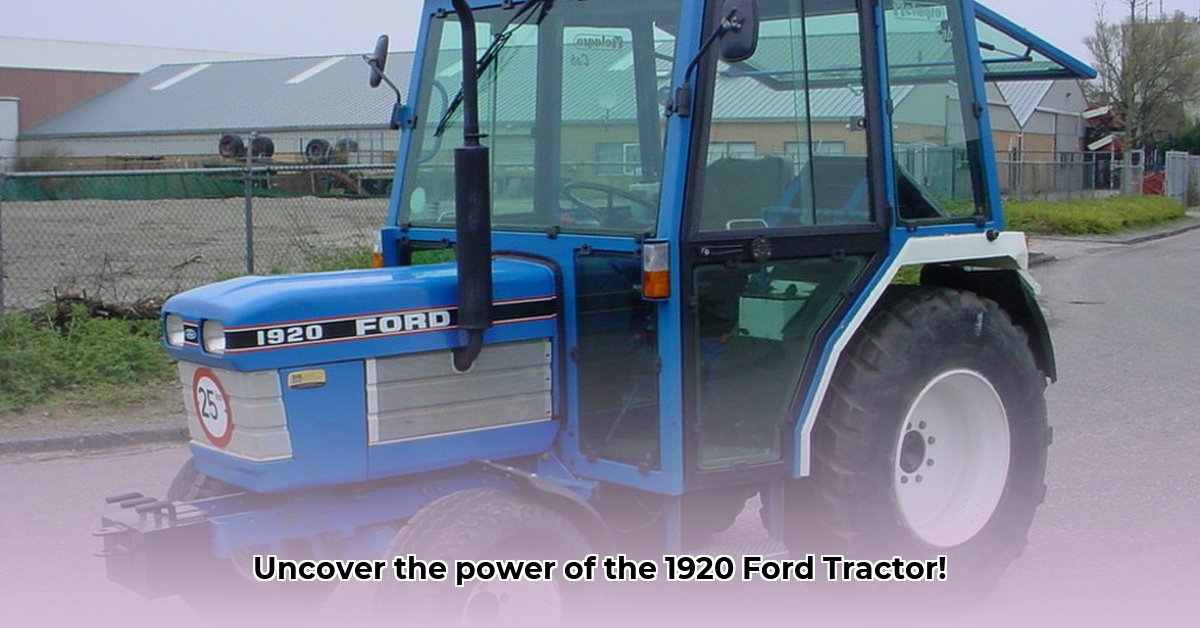
The Ford 1920 tractor, manufactured by Shibaura for Ford from 1987 to 2000, offers a compelling blend of history, practicality, and collector appeal. While its 33 gross horsepower might seem modest by today's standards, its compact size and reliable performance made it a popular choice for smaller farms and various applications. This article explores its specifications, historical context, and current value, providing insights for potential buyers, collectors, and parts suppliers. For additional parts information, check out this helpful resource.
Understanding the Ford 1920's Power and Capabilities
With approximately 33 horsepower, the Ford 1920 wasn't designed for large-scale farming. Its strength lay in its versatility on smaller properties. It handled tasks like mowing, light tillage, and snow removal with ease. Its compact size proved advantageous in tight spaces. While reliable, its power limitations meant heavy-duty work or extensive acreage would push its capabilities. This wasn't a tractor for massive loads or vast fields; it excelled in more modest applications. Did its modest power limit its broader adoption? The answer is likely yes, but this also contributed to its affordability and ease of maintenance.
Real-World Applications and Historical Market Impact
The Ford 1920 proved surprisingly versatile. Its horsepower was sufficient for haying, light tillage, and operating numerous implements. Its size was a bonus in orchards and vineyards. Many owners used it for non-agricultural tasks, including land clearing and powering small generators. However, its limitations were clear: heavy-duty tasks were beyond its capabilities. The tractor’s success stemmed from its affordability and ease of maintenance, appealing to budget-conscious farmers. However, as farming practices evolved and larger tractors became more common, the 1920's market share declined. Its appeal, therefore, shifted over time.
The Ford 1920 Today: Value and Collector Appeal
Today, the Ford 1920 primarily appeals to collectors and those seeking a manageable restoration project. Its simplicity relative to other tractors of its era makes repairs more manageable; however, finding parts presents a considerable challenge. Value depends heavily on condition, maintenance history, and parts availability. A well-maintained, functioning tractor commands a significantly higher price than one requiring extensive restoration. Is restoring a Ford 1920 a worthwhile endeavor? That depends entirely on your skills, resources, and the level of commitment you're prepared to undertake.
Buying a Ford 1920: A Buyer's Checklist
Before purchasing a Ford 1920, a systematic approach is crucial:
- Thorough Parts Research: Investigate part availability. Some parts may be extremely difficult to locate.
- Comprehensive Mechanical Inspection: A qualified mechanic's assessment is non-negotiable. This includes engine, transmission, and hydraulic system checks.
- Careful Condition Evaluation: Assess overall wear and tear, identifying rust, mechanical damage, and modifications. Check all fluid levels and tire condition. A complete visual assessment is only the beginning.
Weighing the Pros and Cons: Is a Ford 1920 Right for You?
| Pros | Cons |
|---|---|
| Relatively affordable initial cost | Limited horsepower |
| Compact size, highly maneuverable | Parts availability can be challenging |
| Versatile with various attachments | Simpler features compared to modern tractors |
| Simpler mechanics for maintenance and repair | Resale value might be relatively lower |
| Potential collector's item | May require specialized knowledge for maintenance |
Sourcing Replacement Parts for Your Ford 1920 Tractor
Finding parts for a Ford 1920 can be challenging, but a multi-faceted approach can increase your success rate. There are many sources, but the relative rarity of certain parts necessitates a diverse search strategy.
Effective Strategies for Part Acquisition
- Online Tractor Parts Specialists: Websites dedicated to vintage tractor parts, such as Yesterday's Tractors, provide a starting point, while online forums offer valuable advice and potential part leads.
- Salvage Yards: These yards often contain parts from scrapped tractors.
- Online Auction Sites (eBay, etc.): These can be sources for rare parts, but require careful vetting to avoid counterfeit or damaged items.
- Reproduction Parts: Some companies specialize in manufacturing reproduction parts as viable alternatives.
- Machinist Consultation: As a last resort, a machinist can create custom replacement parts.
"Understanding the market dynamics – availability and pricing – is critical," says John Miller, a vintage tractor restoration expert at the National Tractor Museum. "Rare parts command a significant premium, while common parts are relatively inexpensive."
Preventative Maintenance: Essential for Longevity
Regular preventative maintenance is key to extending the life of your Ford 1920 and avoiding costly repairs. Regular inspections and addressing minor issues promptly will save time and money in the long run.